
The cast system in India
The caste system has been a central feature of Indian society for around three millennia, shaping social organization across generations. Caste is ascribed at birth and inherited within families, while individuals are generally unable to change their caste status over the course of their lives. Traditionally rooted in Hindu social organization, caste has long influenced occupational roles, social interactions including marriage practices in India. Today, caste identity remains salient for most Indians, including those belonging to non-Hindu religious communities, reflecting its deep entrenchment in social life.
Scheduled Castes, Scheduled Tribes, Other Backward Castes, and Upper-Castes
In contemporary academic and policy discourse, historically disadvantaged groups are formally classified referring to the classification in use in the Indian Constitution as:
- Scheduled Castes – Article 366(24) of the Constitution of India – identifies communities as historically subjected to extreme social exclusion and caste-based discrimination, often referred to as “Dalits” or formerly as “Depressed Classes”.
- Scheduled Tribes – Article 366(25) of the Constitution of India – recognized indigenous or tribal groups that have historically faced social, educational, and economic marginalization and often live in geographically isolated or remote areas.
- Other Backward Castes – have no specific article of the constitution solely devoted to them – but they are indicated as socially and educationally backward groups that are not included among the Scheduled Castes or Scheduled Tribes but are recognized as needing affirmative action.
These categories are used to identify populations that have faced persistent social and economic exclusion compared to Upper Caste groups.
Work, Marriage, Education
Despite constitutional protections and anti-discrimination laws, castes continue to act as a powerful gatekeeper for economic and occupational mobility. Occupational segregation remains pronounced, with lower-caste groups disproportionately concentrated in low-status, low-income and socially “stigmatized” jobs within the informal sector, such as manual scavenging, sanitation, and tanning. Furthermore, Upper-caste applicants are significantly more likely to receive interview callbacks in the private sector than equally qualified low-caste candidates. While a government reservation system provides quotas in public sector jobs, the shrinking of this sector has left many lower caste workers without similar protections in the private labor market.
Caste also remains the primary regulator of social networks through endogamy (marrying within one’s own caste group). According to Pew Research Center, the majority of Indians say their close friends are exclusively from their own caste, and most feel it is “very important” to prevent inter-caste relationships.These patterns reinforce the persistence of caste boundaries across generations, also considering that the access to education is still severely segregated, with nearly 30% of schools enrolling 90% or more students from a single caste category.
Caste and social identity
Caste inequality does not only shape income or employment opportunities and outcomes; it also structures everyday life inside the household. The goods people own, display, and use at home reflect both economic constraints and social norms, influencing how households meet basic needs, signal status, and cope with environmental stress. While income, access to resources, and household demographics such as age composition are important determinants of consumption patterns, they do not fully explain why households with similar economic means make different choices.
A growing body of research shows that social identity – the sense of belonging to a group defined by caste, religion, ethnicity, or community – plays a central role in shaping consumption behaviour. Households do not consume goods in isolation; their choices are influenced by group-specific expectations, reference groups, and social hierarchies. As a result, consumption patterns often reflect not only affordability, but also social positioning within unequal societies (Veblen, 1899; Charles et al., 2009; Kaus, 2013).
Date:
17 Marzo 2023
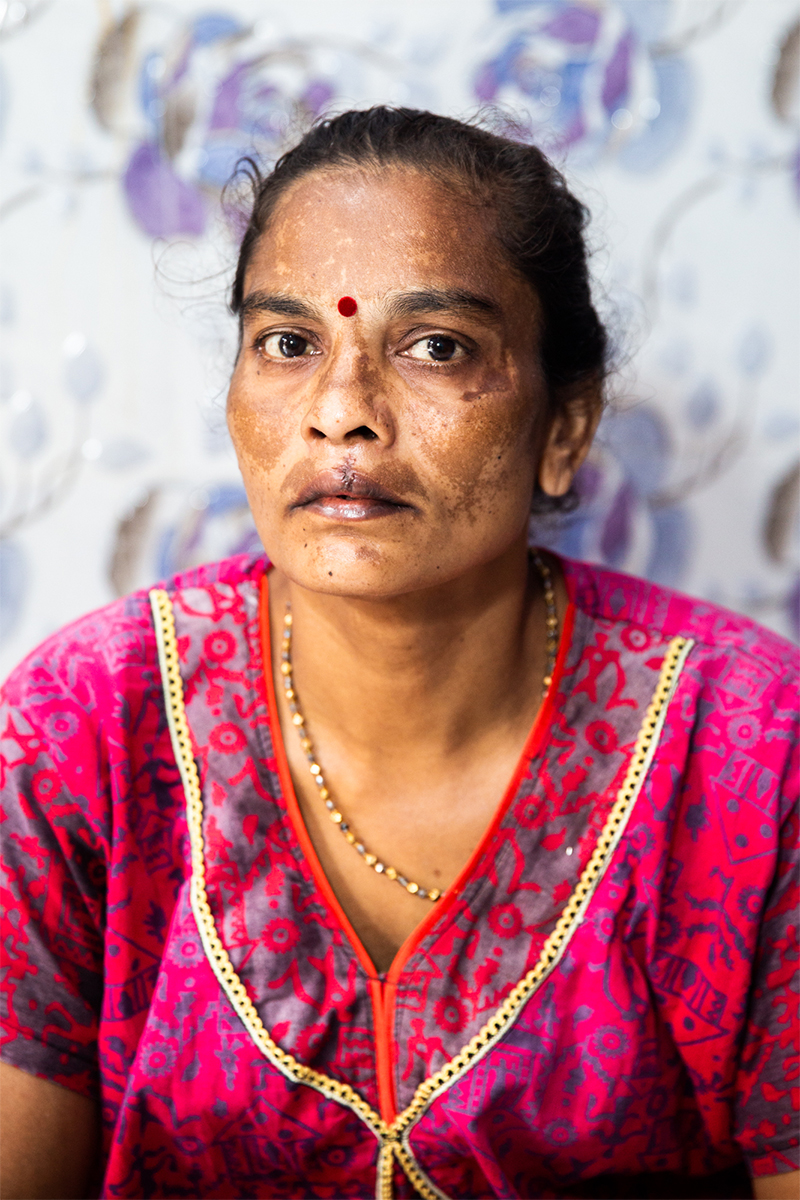
A woman belonging to a Scheduled Caste in India poses for a portrait at a Buddhist temple in Cuffe Parade, Mumbai. Following a socio-political movement launched in 1956 by B. R. Ambedkar, a leader who fought for the rights of Scheduled Caste people, many of them distanced themselves from Hinduism, which relegated them to an inferior position compared to other castes, and converted to Buddhism. India. © Gaia Squarci